
Related Pages
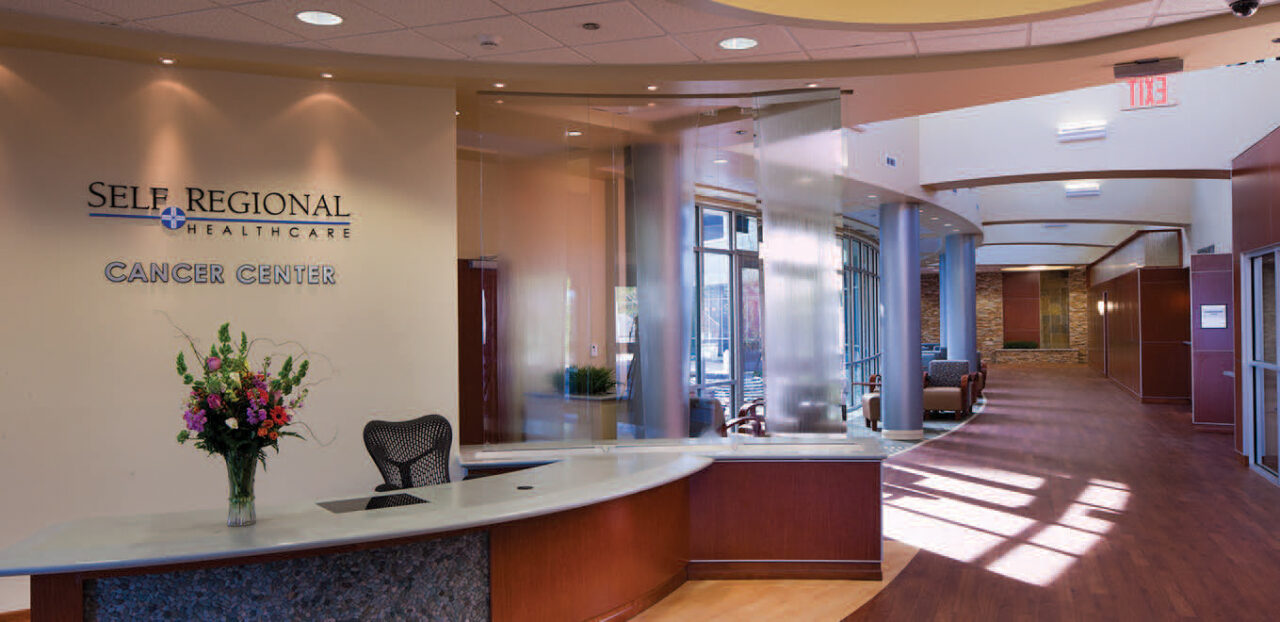
The Cancer Center at Self Regional Healthcare is dedicated to providing our patients with integrated and comprehensive cancer treatments that are designed with the patient in mind.
Self Regional Cancer Center is recognized by the Quality Oncology Practice Initiative Certification Program and is accredited by the American College of Surgeons, receiving the Outstanding Achievement Award for meeting or exceeding standards of care.
People with the most common types of cancer – breast, prostate, lung, colon, gynecologic and skin cancers, as well as many other cancers, can receive the care they need close to home at Self Regional Cancer Center. We combine the latest technologies with nature-inspired design and compassionate care to treat the disease and help patients regain control of their health. Our physicians use a multidisciplinary and individualized approach to treatment. Here, all services are in one place, providing a sanctuary where the body, mind and spirit are treated as one.
Our Healthcare Team
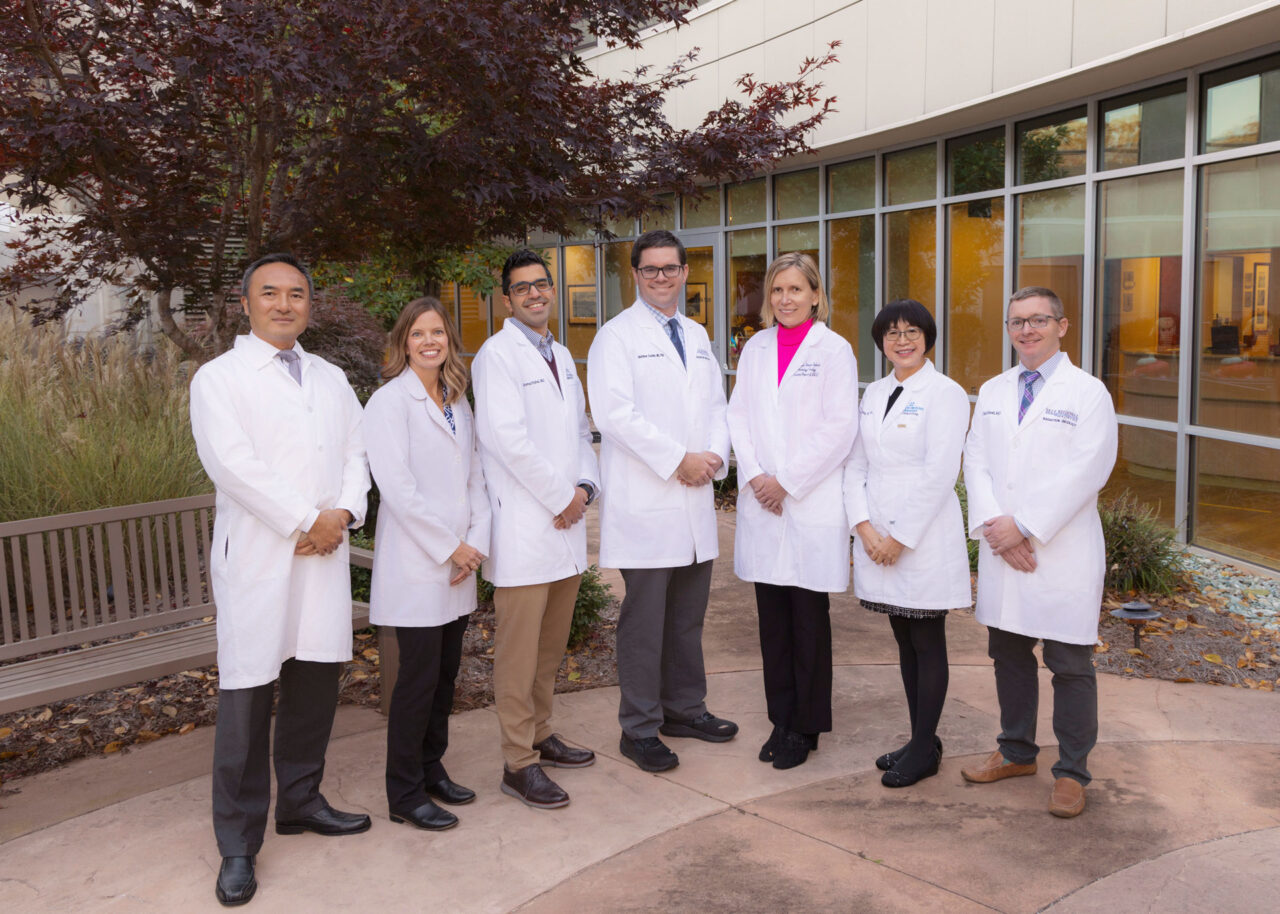
With more than 60 years of experience, our team of highly skilled physicians is dedicated to our patients and the community in which they work and live. Our physician staff includes three board-certified medical oncologists and two board-certified radiation oncologists who are supported by a specially trained and compassionate staff that includes a radiation physicist, a dosimetrist, pharmacists, radiation therapists and oncology nurses.
Radiation Oncology
One of the most powerful tools for fighting cancer is radiation therapy. Our board-certified radiation oncologists and specially trained staff provide a wide spectrum of radiotherapy services including:
- Intensity Modulated Radiotherapy (IMRT)
- Image-guided Radiotherapy (IGRT)
- Sterotactic Body Radiotherapy (SBRT)
- Intracranial Stereotactic Radiosurgery (SRS)
- Brachytherapy
- Partial Breast Irradiation
Clint Wood, M.D. and Matthew Cousins, M.D. are our board-certified radiation oncologists.
Medical Oncology
We follow the National Comprehensive Cancer Network guidelines, which allow us to provide our patients with care that is high in quality and effectiveness. Our board-certified oncologists/hematologists and specially trained staff provide patients with a wide range of hematology/medical oncology services including:
- Chemotherapy
- Immunotherapy
- Advanced Genomic Testing
- Oral Chemotherapy
Joanna Metzner-Sadurski, M.D., Ruiling Yuan, M.D., Alex Yang, M.D., and Ahmad Rahal, M.D. are our board-certified medical oncologists and hematologists.
Surgical Oncology
Surgery is a vital component of cancer treatment and often is used in conjunction with radiation therapy or chemotherapy. Our board-certified, specialized surgeons are prepared to help those diagnosed with cancer who can benefit from surgery.
Among our experienced surgical specialists, Mitra Poorak, M.D., brings advanced expertise in breast surgical oncology. She is fellowship-trained in the treatment of both benign and malignant breast diseases and offers oncoplastic breast surgery, which combines cancer removal with cosmetic techniques to preserve the natural appearance of the breast. Dr. Poorak provides compassionate, individualized care tailored to each patient’s goals and needs.
Exercise Oncology
A 12-week fitness program designed for individuals before, during, or after cancer treatment. Led by certified trainers, it focuses on safe, effective exercise to boost strength, reduce side effects, and improve quality of life. Physician referral required.
NEW Varian Edge Radiosurgery
The Cancer Center at Self Regional Healthcare is home to various state-of-the-art technology, including Varian Edge. It’s designed to effectively treat a wide range of cancer including those in the lung, brain and spine, and allows our oncologists to deliver powerful, precise treatments to radiosurgery candidates – no incisions necessary.
Mobile Mammography Unit
Our Mobile Mammography Unit is a new convenient way to receive yearly breast screenings. The bus features high-quality digital images and is performed by a female ARRT registered mammographer in a completely private environment. The images are read by Self Regional’s dedicated breast radiologist. Appointments and walk-ins are welcome and take only about 15 minutes. The bus travels to six different counties and can be scheduled for your place of business to serve your employees.
3D Mammography
3D mammography, also known as tomosynthesis, combines multiple breast X-rays to create a three-dimensional picture of the breast. These multiple images help doctors see a clearer view of breast masses, making it easier to detect breast cancer.
High Risk Breast Clinic
The Self Regional Healthcare Breast Center is now offering a High Risk Breast Clinic. This clinic provides risk reducing practices for individuals identified with a high lifetime risk of developing breast cancer. It’s a proactive approach to reducing your risks for developing breast cancer and a personalized approach to early detection.
Clinical Research Trials
Through our participation in research trials with the National Cancer Institute and our partnership with the Hollings Cancer Center Clinical Trials Network at the Medical University of South Carolina, our patients have access to the most advanced technologies and treatments available while remaining close to home.
Click here for more information and for a list of current trials .
Patient and Family Support Services
We realize cancer is more than a medical diagnosis. In order to meet all of your needs, we provide the following services:
- Survivorship Care Plan is a document that is personalized and given to each patient and serves as a guide map – walking patients through their cancer journey.
- Oncology Navigator helps patients, families and caregivers through the complex maze of treatments, tests and appointments from diagnosis to post-treatment.
- Nutritional counseling is available for cancer prevention, weight control and maintenance, as well as nutrition for cancer patients while undergoing treatment.
- Social services address the psychosocial needs of patients and their families, help with community referrals and facilitate financial support.
- Financial services help patients deal with complex financial issues that may arise during cancer care.
- On-site Laboratory, (staffed by certified medical laboratory technicians), offers hematology and chemistry testing.
- Lymphedema Treatment is administered by a licensed occupational therapist to provide preventative education and postoperative treatment.
- Yoga classes are offered to help with the healing process for qualifying patients and survivors.
- Support groups meet regularly to help patients cope with the frustration and fears associated with a cancer diagnosis.
- Genetic counseling is designed for anyone who is concerned about his or her risk of developing cancer based on family history or personal medical history.
- Pastoral care is offered for the diverse spiritual needs of patients and families.
- Medical Library, located in Self Regional Medical Center, is stocked with information on any health matter.
- Rehabilitative Services help patients build strength, reduce stress and regain independence during and after treatment.
Referral Process
The Cancer Center accepts new hematology and oncology patients; please call (864) 725-7353 to make an appointment today. Patients who have confirmed oncology diagnoses will be scheduled within 48-hours of referral from primary care physician.
Please search our physician directory online or call (864) 725-6058 for the name of a physician in your area.
Medical Oncology appointments: Call 725-7100
Radiation Therapy appointments: Call 725-4741
Transcript
My lowest point I think was after getting over it I guess to find out that I did have breast cancer. Thinking about reconstructive surgery and all that after I found that I didn't have to have that. I guess just going through the chemo because it was it was rough because I couldn't drive. At times I couldn't function and you just you know you just didn't didn't know if you're gonna make it through today. When someone faces the diagnosis of cancer they sort of are thrown into a storm that is disruptive to themselves, their families. It's a frightening place to be. I think that we here itself have the we have the tools and the resources that we need to be able to get through this and get through this and get through this. I think that we here itself have the we have the tools and the resources that we need to be able to get through this. I think that we here itself have the we have the tools and the resources that we need to be able to get through this. I think that we here itself have the we have the resources and the resources that we need to be able to get through this. I think that we here itself have the we have the resources The personnel, the hearts, the healing hands that are necessary to provide a shelter from that storm. I just thank God for them, for everything. I really do, for the folks here. I really do, because I had no direction in the beginning who I was going to see, who I was going to come in contact with, or anything. Because when they asked me, I was just so upset. I was like, it don't matter. Just whoever, it doesn't matter, because I don't know anybody anyway, so it's not going to make a difference. But, you know, I thank God led me to the right folks from the beginning to the end. So, in essence, we're not treating patients. We are helping our neighbors, friends, and new friends. So, everybody knows what you do when you have cancer. You go to a cancer center. And I was blessed to live in Greenwood, five miles from my house. And so, we hooked up. When they come in, they don't come in like you're fixing to die, even though you may be. They come in smiling. Hey, Mr. Sprouse. I said, call me Stanley. That's my name. I think what is unique of South Cancer Center, in a sense, is that it's very, it's small but comprehensive. If there's any more people. Anywhere that care any more in the medical field, I can't imagine who they'd be. I did radiation with Dr. Fonke here, and everybody over there in the radiation department was just as wonderful as well. I mean, they just kept you going, kept you uplifted, was there for you, but the folks here on this side, because it was so just detrimental to me in the beginning, I mean, they just kept you going, kept you uplifted, was there for you, but the folks here on this side, because it was so just detrimental to me in the beginning, I mean, they just kept you going, kept you uplifted, was there for you, but the folks here on this side, because it was so just detrimental to me in the beginning, I mean, they just kept you going, kept you uplifted, was there for you, but the folks here on this side, because it was so just detrimental to me in the beginning, I don't know how I made it through without them. I really don't, I really don't. And even the support, not just the nurses and all, but just everybody, from checking in at the desk to on my way out, being greeted by the ladies out there, helping you to your car if you need it, you know, just wishing you a good day, just everybody was just uplifted. I mean, and that really makes a difference. And that's what we need as patients, cancer patients in particular, because a lot of those drugs can pull you down. You already got that low self-esteem about yourself, 'cause you're feeling something, and you're feeling so bad, you know, and just to see a smiling face and somebody to uplift you really makes a difference. Self Regional is the hospital with a vision. It's been here for many, many years, and it's been built by Mr. Self with the vision to provide a care close to home and a quality state of the art, and it truly is. So all the advances that are available out there, we get them at Self, and the medications, approved by FDA, we will have them the next week available here. What makes a difference in people's lives is my colleagues and coworkers. I have excellent nurses, excellent support staff, and they are here to take care of our patients. And he told me, "Well, we found something, and I'm going to want you to make an appointment when I do biopsy. We'll test and everything." And I felt, wow, this can't be. It could be everybody else, but it can't be me. You know, I take care of other people. I don't get sick. Things don't happen to me, but it actually did. All of the people who are here at this cancer center really care about our patients, and not only care about them, their medical treatment, but also about them as a person, and what are their hopes and their fears, and help them, support them actually get through these treatments so they can beat the cancer and go on to live a productive and happy life. I started painting. I forget how I started doing it. Somebody was telling me, "Do something that makes you happy, you know." Dr. Wood, every time I come in, he'd say, "Well, what are you doing today, Ms. Langman? What have you been doing since I last saw you?" And I said, "Well, I was just painting yesterday." And I'm telling him the different stuff I did at work and at home. It started making me feel at ease. And I showed him a picture of one of the first paintings I did. He said, "Oh, this is wonderful." I said, "No, it's not." And I was thinking to myself, he's just being nice. He said, "You got any more pictures?" I'm not showing him more pictures. He said, "Oh, this is great." He said, "You should keep doing that. You should keep painting. You're doing good." And they really encouraged me to keep on with the painting. Deciding which treatment can be best for a patient is now a very individual type decision. Each cancer is very different and requires an individualized approach. Here at the Cancer Center, we have tumor boards, and we have collaboration between a variety of different physicians to make sure that each patient's individual cancer gets the attention that it needs. We meet every week and discuss our new consult patients. We go over their diagnosis. We review their pathology. We review their CAT scans with radiologists. And then we have a discussion with other doctors to find the best possible treatment. And our goal always is to cure. And if the cure is not possible, to treat it as a chronic disease. All the doctors working on a particular cancer case are seeing the same things, discussing the same issues. And we feel that that provides a more comprehensive approach to the patient. The other best part of Self Hospital is that we are affiliated with the Medical University of South Carolina. And we do send our patients for clinical trials if needed. Some patients with advanced cancer, they might not have any further options after being on, like, many standard drugs or standard chemotherapy options. And they might, like, still progress. Like for those patients, we tend to send them for clinical trials to MUSC. We have the latest technology to really pinpoint the radiation to a very small area to deliver radiation dose only where we want it to go and to spare the rest of the surrounding area. We offer surgical brachytherapy for prostate cancer and for gynecologic cancer. We offer the latest in stereotactic body radiation for lung, liver, spine, prostate. We offer stereotactic radiosurgery for brain tumors. These are treatments which are usually only found at major academic centers. And here in Greenwood, at the Cancer Center, we have all these treatments available for our patients. Small, family-friendly environment, yet we, patients, can get world-class treatment. A relative come and tell me she's been diagnosed with breast cancer, you know, and I'm trying to guide her just like folks did me, you know, and she's been calling me every day. I said, "Call me." I said, "You're going to cry. That's fine." I cry. I still cry, you know, but I'm going to help you get through because people were there to help me get through. So, and like I told you, she'll be coming here. I told her, "The folks are great. They're wonderful. They're going to help you. They're going to make sure you're fine. They're going to keep you up lifted. You know, you're not going to be down. They're going to be very positive with you." I said, "And that's what we need. That's what got me through." As a referring physician, I think you should expect to have good communication lines between the oncologic physician and should be receiving the medical documentation on a routine basis, not only at the beginning, but throughout the treatment course and in a later and a summary of the treatment once it's been completed. I can give you an example is that a few days ago, I just got a text from a physician in Newberry. And they asked, "Do we actually treat this kind of disease? When should they make a referral?" So I was able to text them back rather than use their office to call our office. The nurse is calling us and ask a question and reduce the looping around. Direct communication with the physician, that is always a plus. To the referring physicians, I would say that we understand the position you're in. You have a challenging position. My father is a primary care physician, and he always told me about the struggles and the difficulties of handling all the breadth of problems that you have to handle on a daily basis. And here at the cancer center, we have physicians who are specifically ready to tackle all the problems and challenges that can occur with a patient with a diagnosis of cancer. And we hope that you would trust us with your patient to care for them and to also keep you informed to make sure that you're in the loop of what's going on with that patient. Because it's not just fighting the cancer, we also require and really need the help of the primary care physician. To get the patient through from a variety of aspects. So the primary care physician can be a very important part in helping patients navigate through this journey and this battle against their cancer.