
Community Health Committee Grants
Apply for funding to help us achieve a healthier community — together. The Self Regional Community Health Committee reviews funding proposals annually from 501(c)(3) nonprofit organizations serving Abbeville, Edgefield, Greenwood, Laurens, McCormick, Newberry and Saluda counties.
Proposals must support at least one of the committee’s three funding goals, address at least one current Community Health Needs Assessment (CHNA) priority, and demonstrate a direct and measurable health benefit to residents of the Self Regional Healthcare service area.
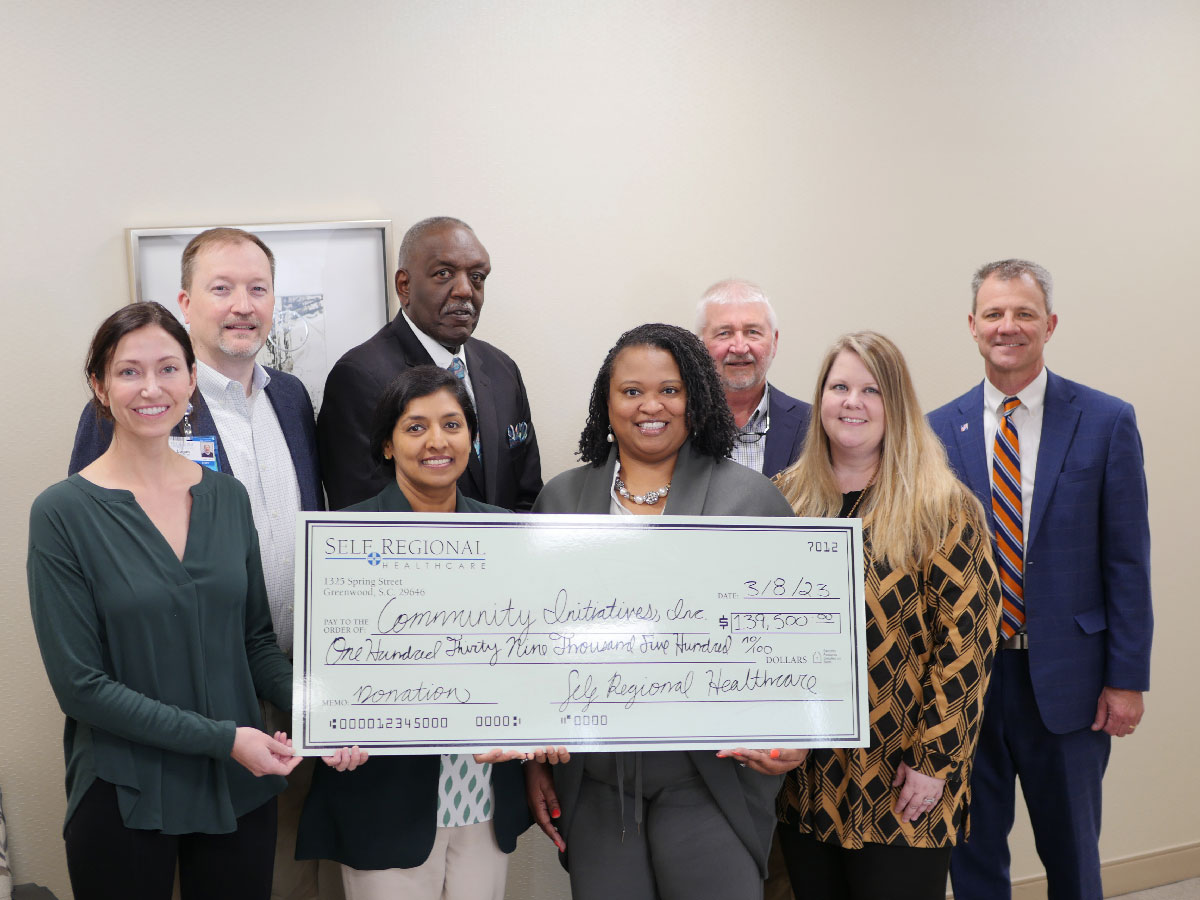
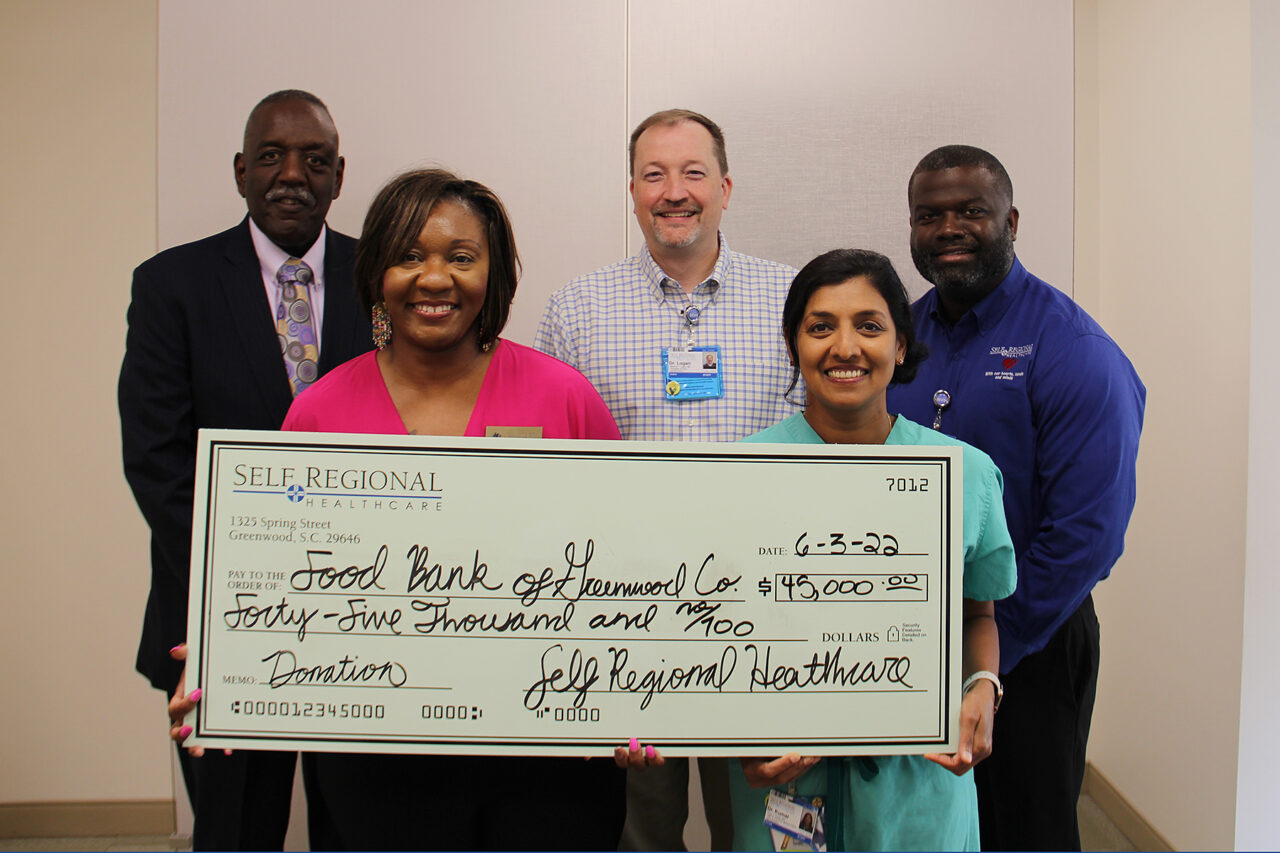
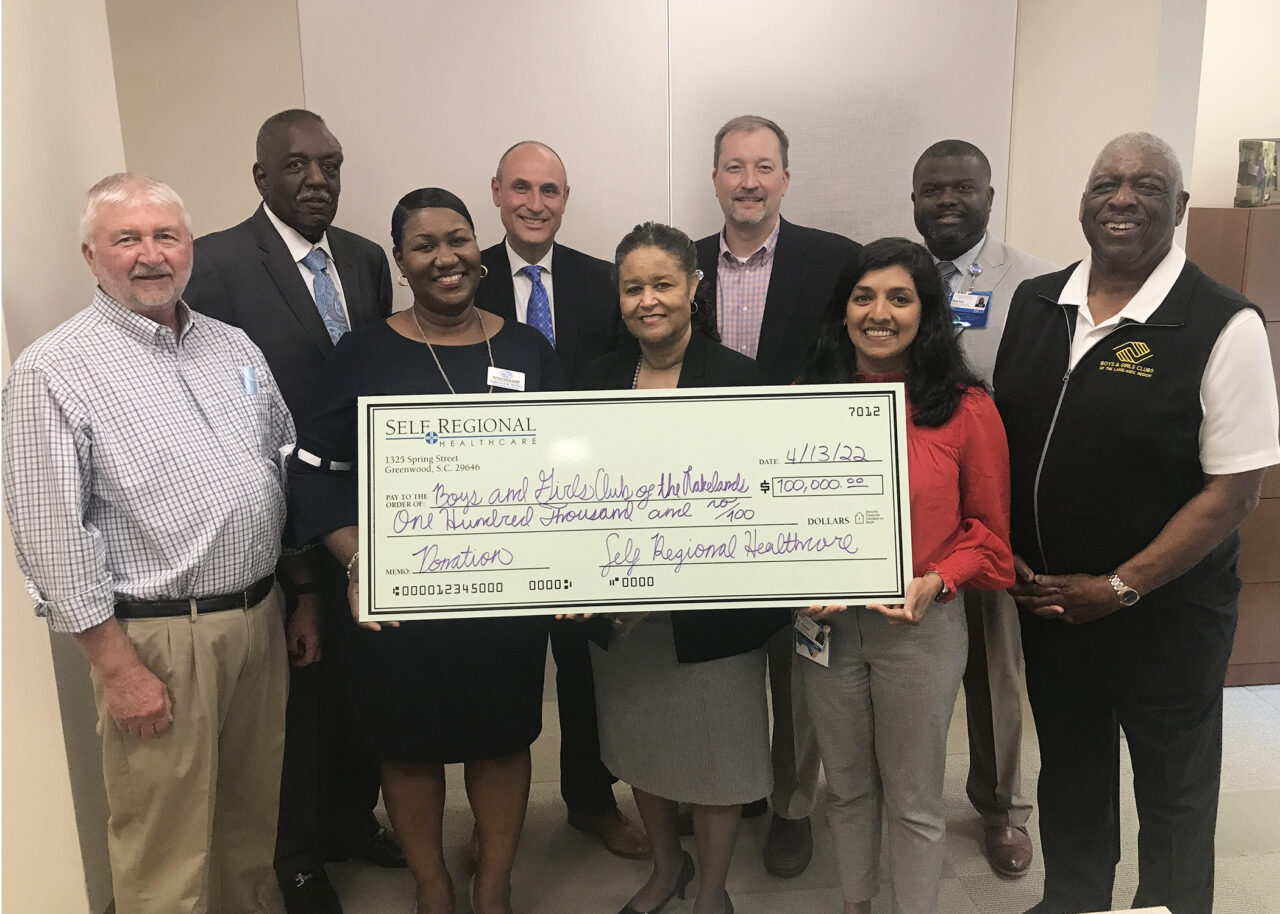
Past Recipients
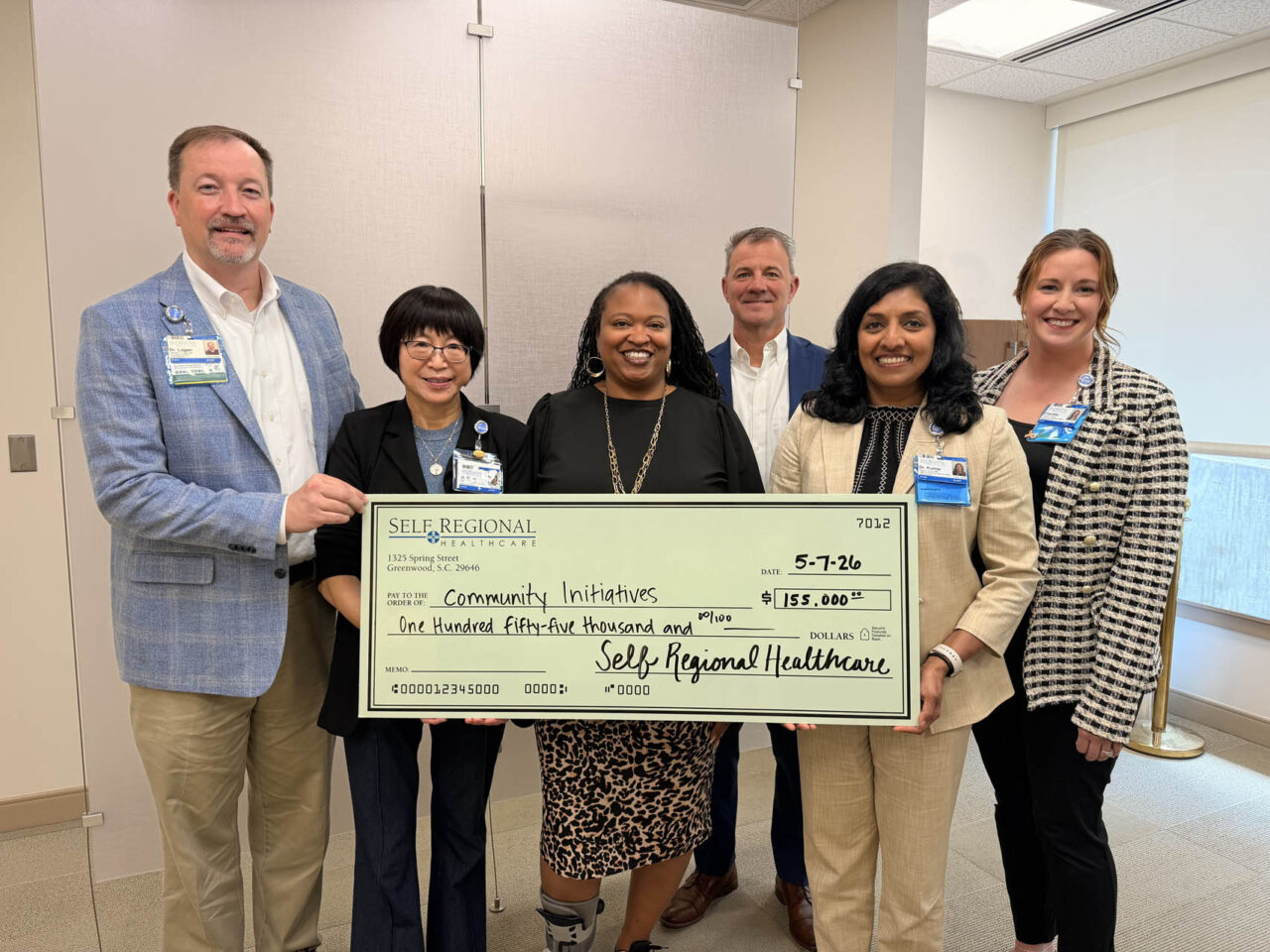
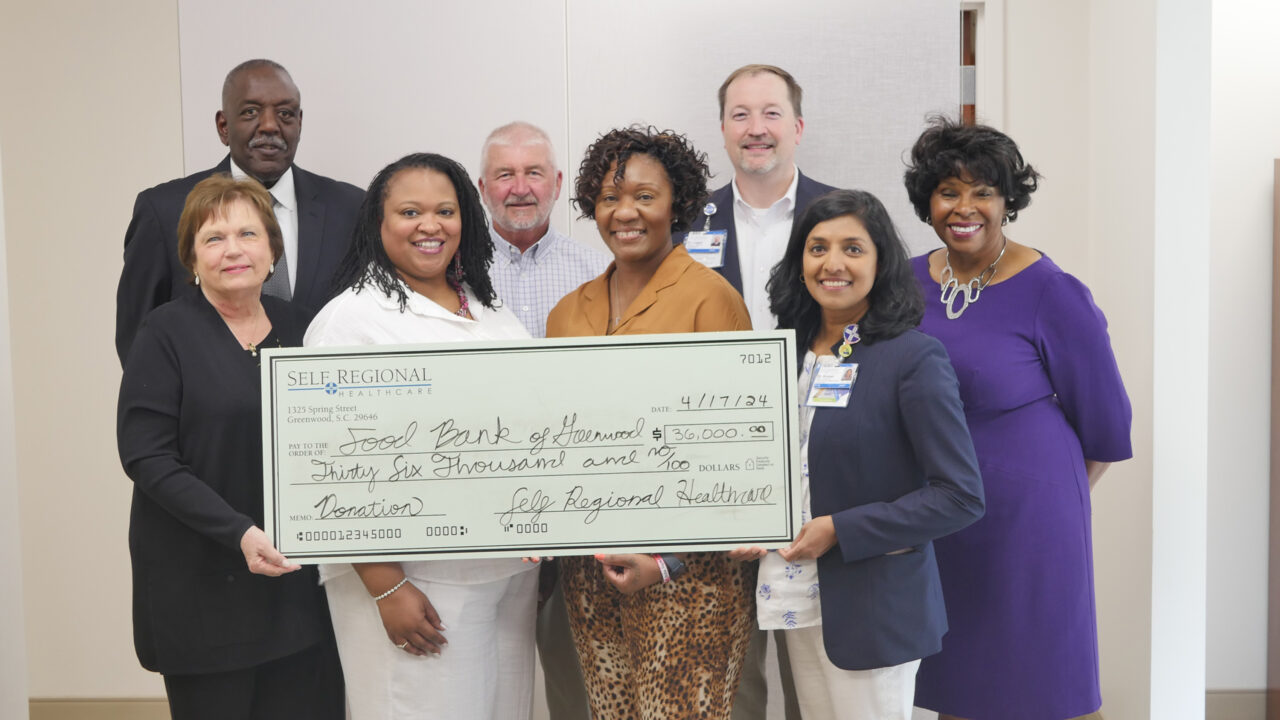
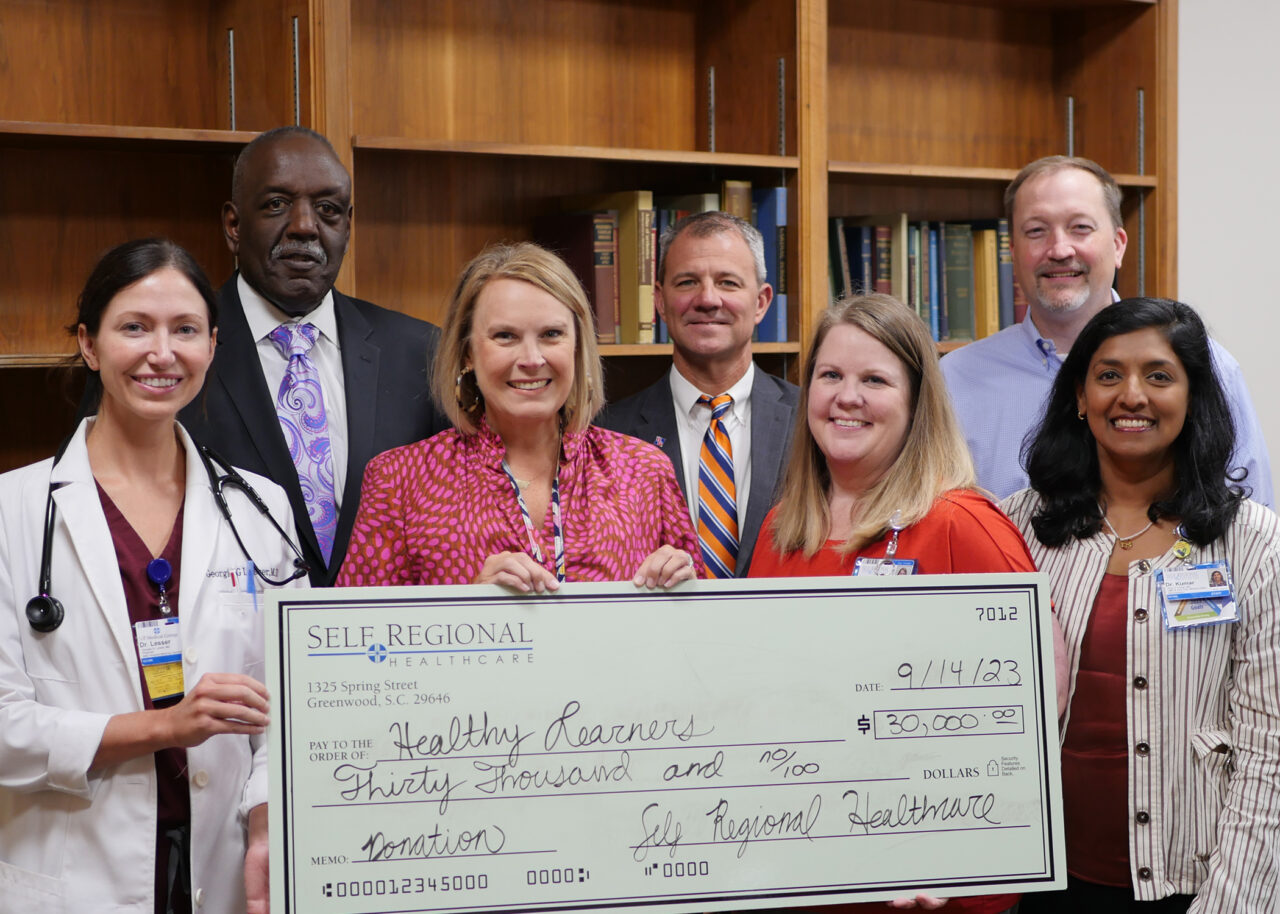
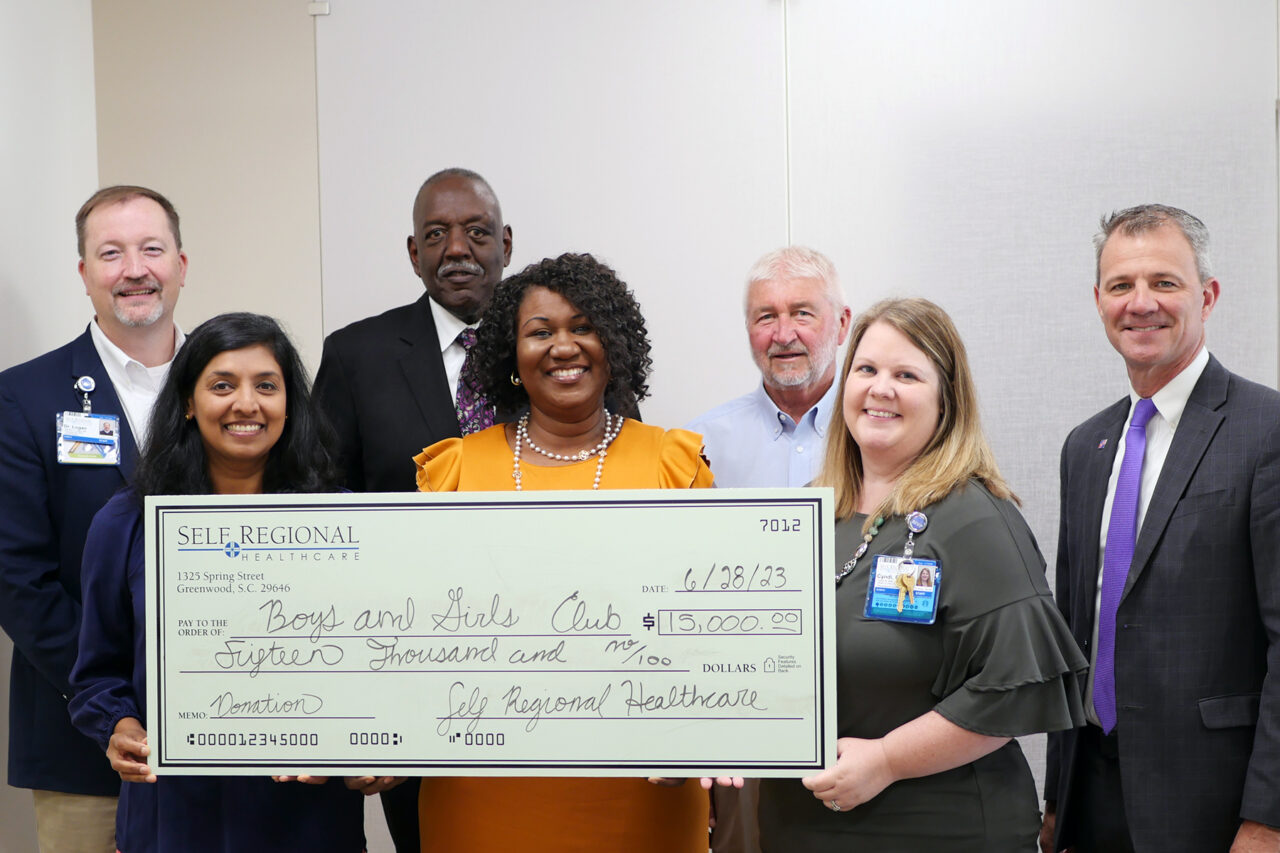
Read about organizations the Community Health Committee has funded:
Funding Goals
Projects must support at least one of the following Community Health Committee (CHC) funding goals:
- Improve prevention, treatment, and early detection. Increase the treatment, prevention, and early detection of diseases and conditions that significantly affect residents of the Self Regional Healthcare service area.
- Promote healthy lifestyles. Support initiatives that encourage healthier behaviors and reduce conditions associated with unhealthy lifestyles, including obesity, cardiovascular disease, substance use, tobacco use, teen pregnancy, and child abuse or neglect.
- Address Social Determinants of Health. Improve conditions that influence health outcomes, including barriers related to access, transportation, housing, food security, and other social and economic factors identified through community health assessment efforts.
2025 Priority Health Issues
The 2025 Community Health Needs Assessment identifies the following five priority health issues:
- Mental Health and Substance Use: Addressing high stress, limited provider access, cost barriers and low awareness of available services.
- Access to Care and Care Coordination: Reducing barriers related to appointment wait times, insurance acceptance, transportation and navigation among emergency, primary and specialty care.
- Aging and Older Adult Health: Supporting chronic disease management, care transitions, fall prevention, medication management and access to supportive services for a growing older adult population.
- Cancer Prevention and Screening: Reducing barriers to screening and improving early detection to address cancer incidence and mortality.
- Chronic Disease: Addressing diabetes, high blood pressure and obesity through nutrition, physical activity and access to preventive and supportive services.
Eligibility Requirements
Community Health Committee funding supports projects that produce direct, measurable health benefits for residents of Abbeville, Edgefield, Greenwood, Laurens, McCormick, Newberry, and Saluda counties. To be considered for funding, applicants must meet all requirements below.
Organizational Eligibility
- Be recognized as a tax-exempt organization under Section 501(c)(3) of the Internal Revenue Code.
- Have maintained 501(c)(3) status for at least two years before the application deadline (Tiers 1 and 2 only).
- Be in good standing with applicable federal, state, and local filing requirements.
- Maintain an active governing board responsible for organizational and financial oversight.
- Provide services within at least one county in the Self Regional Healthcare service area: Abbeville, Edgefield, Greenwood, Laurens, McCormick, Newberry, or Saluda.
- Demonstrate sufficient organizational, administrative, and financial capacity to manage the requested funds.
Program Eligibility
- Align with at least one CHC Funding Goal (see Funding Goals above).
- Address at least one priority identified in the current Community Health Needs Assessment (CHNA).
- Demonstrate a direct and measurable benefit to residents of the Self Regional Healthcare service area.
- Include clearly defined goals, activities, outputs, outcomes, and evaluation measures.
- Demonstrate meaningful community collaboration when appropriate.
- Identify other funding sources that have been secured or pursued.
- Provide a project budget that clearly connects requested expenses to proposed activities and measurable outcomes.
Required Documentation
Have these ready to upload with your application:
- IRS 501(c)(3) determination letter
- Completed W-9
- Most recent tax return or Form 990
- Current organizational annual operating budget
- Detailed project budget
- Most recent financial statements
Incomplete applications or applications missing any required documentation may be deemed ineligible for review. Contact the Grants Management Office with questions regarding eligibility or documentation.
Prior Award Compliance and Good Standing
Organizations that have previously received Community Health Committee funding must be in good standing with all prior grant requirements at the time of application. Good standing includes:
- Timely submission of all required six-month and final reports.
- Reporting on outcomes and performance measures identified in the approved application.
- Appropriate use of grant funds for approved project purposes.
- Full accounting of grant funds in the final closeout report.
- Compliance with the approved project scope, budget, timeline, and other award conditions.
- Communication of material project changes and submission of required extension or amendment requests.
- Appropriate acknowledgment of Self Regional Healthcare as a funding partner.
- Satisfactory resolution of any outstanding reporting, financial, administrative, or other compliance concerns.
Organizations that are not in good standing may be deemed ineligible for additional Community Health Committee funding until outstanding compliance issues are resolved.
Community Benefit Requirement
CHC funding is intended to improve the health and well-being of residents within the Self Regional Healthcare service area. Projects must demonstrate a direct and measurable benefit to community members, patients, caregivers, vulnerable populations, or underserved residents.
Priority Consideration
In addition to supporting at least one CHC Funding Goal, the Committee gives priority consideration to projects that:
- Improve health outcomes or access to care.
- Serve vulnerable, underserved, or high-risk populations.
- Advance priorities identified in the current CHNA.
- Avoid unnecessary duplication of services already available in the community.
Educational Institutions and Academic Programs
Educational institutions, colleges, universities, technical schools, and affiliated foundations may apply; however, the proposed project must primarily benefit residents of the Self Regional Healthcare service area rather than students, faculty, staff, or institutional operations. The project must demonstrate a direct and measurable community health benefit aligned with CHC funding goals and current CHNA priorities.
| Projects That May Be Eligible | Projects Generally Not Eligible |
|---|---|
| ✓ Community health screenings, vaccinations, or disease-prevention programs for area residents | × Student scholarships, tuition assistance, or financial aid |
| ✓ Mobile clinics and outreach serving underserved populations | × Student enrichment or academic support programs |
| ✓ Behavioral health, substance use, or wellness services delivered to community members | × Workforce development that primarily benefits students without a clearly defined community health outcome |
| ✓ Cancer screening and early-detection initiatives | × Academic research without direct and measurable community health impact |
| ✓ Community-based health education focused on CHNA priorities | × Equipment, facilities, or infrastructure primarily supporting classroom instruction |
| ✓ Clinical training programs that directly expand access to healthcare services for community residents | × General operating support for academic departments or institutions |
| ✓ Community health fairs with an emphasis on health promotion activities focused on CHNA priorities | × In-class instruction activities or curriculum development |
Primary Beneficiary Test: Who primarily benefits from the requested funding? Projects whose primary beneficiaries are community residents, patients, caregivers, or underserved populations will generally be eligible. Projects whose primary beneficiaries are students, faculty, staff, or the institution itself will generally not be eligible.
Ineligible Requests
- Multi-year funding commitments.
- Endowments, permanent foundations, trusts, or interest-bearing accounts.
- Political campaigns, lobbying, or attempts to influence legislation.
- Debt reduction, deficit financing, or reimbursement of costs incurred before the award.
- Projects that create liability or financial obligations for SRH beyond the approved award.
- General operating support that does not demonstrate measurable community health impact.
- Projects that primarily benefit students, faculty, staff, or institutional operations.
- Projects that duplicate existing community services without demonstrating a significant unmet need.
Funding Tiers
Funding requests are organized into three tiers. Each tier is defined by the criteria listed below, and the request amount range shows the typical size of award for that tier.
| Tier | Request Amount | Tier Criteria |
|---|---|---|
| Tier 1 | $50,001–$125,000 | • Addresses one or more prioritized significant needs in the Community Health Needs Assessment (CHNA) and Implementation Strategy • Serves two or more counties in the SRH service area • Serves identified vulnerable or underserved populations to help address health disparities • Partners in some capacity with Self Regional Healthcare and affiliated hospitals • Meets an important community need that no other public or non-profit agency provides |
| Tier 2 | $25,001–$50,000 | • Addresses social determinants of health, with an emphasis on food, housing, and transportation needs across the SRH service area, as prioritized by the Committee • Serves identified vulnerable or underserved populations to help address health disparities • Partners in some capacity with Self Regional Healthcare and affiliated hospitals |
| Tier 3 | Up to $25,000 | • Focuses on making our community a stronger place to live, work, and play • Requests startup funds to pilot or implement a new program, with the intention that the agency becomes self-sufficient in the near future |
Funding Tier Determination: Applicants should select the funding tier whose criteria best fit the proposed project. The amount requested must fall within the selected tier’s funding range. The Committee will confirm final tier placement during review. All applications are scored on the same criteria (see Application Evaluation Criteria), and the tier criteria guide how each criterion is judged. Placement within a tier does not guarantee funding or the full amount requested.
Application Evaluation Criteria
Reviewers score each criterion below from 1 to 5: 1 = Weak, 2 = Below Average, 3 = Average, 4 = Above Average, and 5 = Strong. Criteria with a higher weight count more toward the total score. The same criteria apply to all funding tiers.
| Evaluation Criterion | Weight | Reviewers Will Consider |
|---|---|---|
| Alignment with CHC Funding Goals | 20% | Clearly supports at least one CHC funding goal and demonstrates how the proposed activities advance that goal. |
| Demonstrated Community Need | 15% | Documents a clear need and connects it to a current CHNA priority, target population, or identified service gap. |
| Impact and Measurability | 20% | Defines the expected community benefit, population and number served, measurable outcomes, and a credible method for evaluating results. |
| Feasibility and Organizational Capacity | 15% | Demonstrates a realistic implementation plan, appropriate staffing and resources, and the capacity to manage the project and grant funds. |
| Sustainability and Funding Plan | 10% | Provides a realistic plan for sustaining successful activities beyond the grant period and identifies other funding sources or a longer-term funding strategy. |
| Budget Reasonableness, Transparency and Value | 15% | Demonstrates that costs are clear, reasonable, and proportionate to the proposed activities, number served, and expected outcomes, and that CHC funds support meaningful project costs and overall value. |
| Community Partnerships and Collaboration | 5% | Demonstrates meaningful partnerships that strengthen implementation, expand reach, leverage resources, or reduce unnecessary duplication of services. |
| Total | 100% | Total score: 100 points |
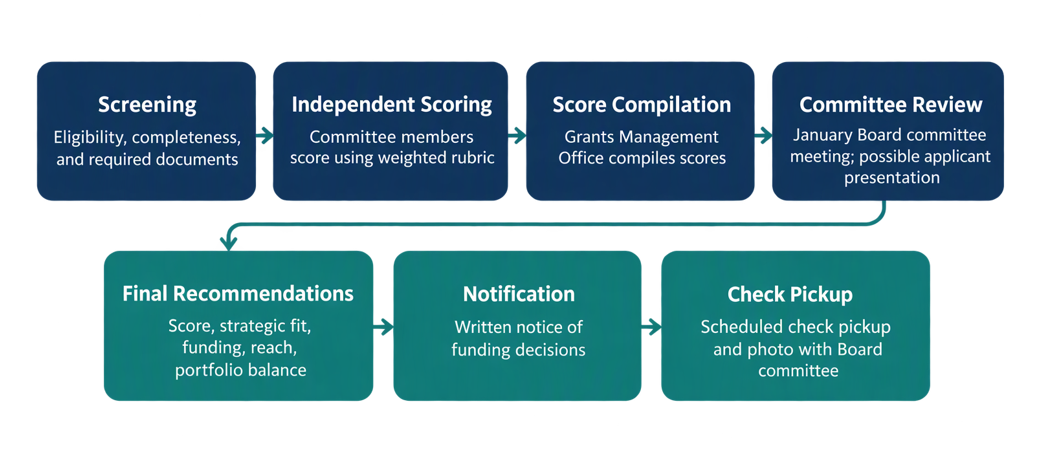
Scores guide funding decisions but do not decide them alone. The Committee may also consider the funding tier, past performance, geographic distribution, populations served, available funds, and overall portfolio balance.
Review and Award Process
Funded Project Requirements
- Submit a six-month progress report and a final report detailing activities, expenditures, outcomes, and progress toward approved goals.
- Notify the SRH Grants Management Office of any material change to scope, budget, or timeline; extensions and amendments require written approval.
- Return unspent or misused funds as the grant agreement requires.
- Credit Self Regional Healthcare visibly on all funded programs, events, and products, and display its logo on related materials, reports, and collateral.
A grant agreement signed by Self Regional Healthcare and the funded organization will be required before the disbursement of funds.
Unused Grant Funds
Recipients must account for all grant funds in the final closeout report. Unused funds must be returned to Self Regional Healthcare at the address below within 30 days of closeout, unless prior written approval is given to carry them forward or apply them to another project-related purpose.
Self Regional Healthcare
Attn: Accounting, Support Services Building 2nd Floor
104 Wells Ave
Greenwood, SC 29646
A one-page summary is available to download: CHC Funding Opportunity Overview (PDF, 1 page)
The Community Health Committee values the organizations working to improve health and well-being across Abbeville, Edgefield, Greenwood, Laurens, McCormick, Newberry, and Saluda counties. Before applying, please review the eligibility requirements, funding tiers, and evaluation criteria carefully to make sure your proposal shows a direct and measurable benefit to residents of the Self Regional Healthcare service area.
If you would like to discuss your project concept before preparing a proposal, or if you have questions about this funding opportunity, the application process, or required documentation, please contact the Grants Management Office at grants@selfregional.org.
Apply
Application Timeline
Applications for the current grant cycle are accepted from October 1 through December 31, 2026.
Application Questions
Email: grants@selfregional.org
Grant Management Office

Brittni King, MPH
Grant Coordinator
864-725-7897 · brittni.king@selfregional.org
Andria Wendell, MPH
Grant Programs Manager
864-725-7895 · andria.wendell@selfregional.org
Applicant Submission Checklist
Confirm each item below before submitting. Incomplete applications may be deemed ineligible for review.
- Organization holds 501(c)(3) tax-exempt status (for at least two years if applying for Tier 1 or 2)
- Organization is in good standing with federal, state, and local filing requirements
- Organization provides services in at least one SRH service area county
- Project supports at least one CHC Funding Goal and a current CHNA priority
- Project shows a direct and measurable benefit to service area residents
- Goals, activities, outputs, outcomes, and evaluation measures are clearly defined
- Other secured or pursued funding sources are identified
- Prior awards (if any) are in good standing
- Project meets the criteria of the funding tier selected, and the request amount is within that tier’s range
- IRS 501(c)(3) determination letter attached
- Completed W-9 attached
- Most recent tax return or Form 990 attached
- Current organizational annual operating budget attached
- Detailed project budget attached
- Most recent financial statements attached
How to Apply
Apply online. The application has four short steps — 1. Organization information, 2. Project details, 3. Budget and required documents, and 4. Declaration — and a confirmation and completed copy of your submission will be emailed to you when you submit.
Prefer to apply offline? Download and complete the Grant Application Template (fillable 13-page PDF) , then email the completed application and required documents to grants@selfregional.org.
Use the subject line: FY27_SRH Community Grant Application_[Your Organization Name].
Funding Review Q&A
What kinds of projects are most likely to be brought to the Community Health Committee?
Projects are most likely to advance when they support at least one of the three funding goals and align with one or more 2025 Community Health Needs Assessment priorities. The strength of that connection is important: applicants should clearly explain how the proposed project advances the selected funding goal(s) and addresses the identified community health priority or priorities.
What makes a proposal more likely to advance for committee review?
Strong proposals identify a clear community need, describe the population and service area to be reached, include specific and measurable outcomes, provide a realistic project budget and timeline, and demonstrate partnerships that strengthen the project or help avoid duplicating existing services.
What types of funding requests are the best fit?
Requests should support a defined project or program that can be completed and evaluated within the grant period. Applicants should explain how the requested funds will be used, identify other funding sources and show how the work will benefit communities in Self Regional’s seven-county service area.
What requests are unlikely to move forward?
Requests are less likely to advance when the proposal is not cohesive, the budget appears inflated or is not clearly justified, the request primarily supports routine operations or personnel, does not demonstrate strong sustainability focus, or the project activities do not explicitly connect to the stated goals and measurable outcomes. Requests also will not advance if the applicant is ineligible, required documentation is missing, or the proposed use of funds falls within the categories the committee cannot support.
Is a PowerPoint presentation required?
Yes. Applicants whose proposals advance for committee review must prepare and present a PowerPoint presentation in person to the Community Health Committee. The presentation should clearly summarize the community need, proposed project, population served, goals and measurable outcomes, partnerships, timeline, and requested budget.
Does meeting the criteria guarantee committee review or funding?
No. Meeting the eligibility and application requirements allows a proposal to be considered, but it does not guarantee that the proposal will be brought to the committee or funded. Proposals may be prioritized based on alignment with funding goals, expected community benefit, readiness, available funds and the overall strength of the application.